

4 Types of CBG Flower – Best CBG Strains You Need To Try
Discover the best CBG strains to try, from premium Platinum Cookies CBG to fruity Purple Punch and classic Blue Dream with a fresh CBG twist.

Free shipping by country & method *Free delivery over 60€ applies to most EU countries. Shipping conditions may vary by destination.
Login
Register


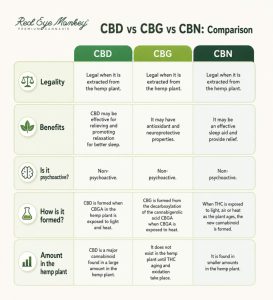
If you’ve been comparing CBN vs CBG vs CBD, you’ve probably already noticed that CBD is only the starting point. CBD oil is where most people begin because it is approachable, widely available, and easy to understand. But once you start exploring different formulas, it becomes clear that cannabinoids often make more sense as part of a full spectrum profile, where CBD, CBG, CBN, CBDA, CBC, and other plant compounds work together rather than standing alone.
This is the idea behind the entourage effect: different cannabinoids and plant compounds may influence how the overall profile feels and behaves. For most people, the key question is not deep science, but simple clarity: what does each cannabinoid do, how are they different, and which type of product fits your needs best? Once you understand the basic differences between CBD, CBG, CBDA, CBN, and CBC, the names stop feeling like random letters and start becoming useful when choosing the right product.
Cannabinoids are naturally occurring compounds found in the cannabis plant. While they have become a major topic in wellness and research, the core idea behind them is quite simple. These compounds interact with biological systems in the human body in a targeted and specific way.
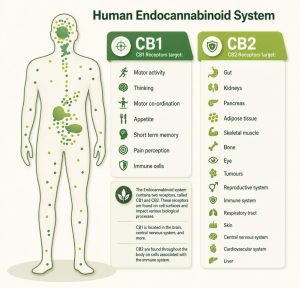
They do this by binding to cannabinoid receptors, commonly known as CB receptors. These receptors are found throughout both the body and brain, and they are part of a larger regulatory system that helps manage communication between cells.
This communication system is one of the reasons cannabinoids have gained so much attention. By interacting with these receptors, cannabinoids may influence processes related to mood, perception of discomfort, relaxation, and overall balance. Much of this interaction is linked to the central nervous system, which is why cannabinoids are often discussed in relation to both physical and mental experiences.
While CBD (cannabidiol) is currently the most widely recognized cannabinoid, it is only one part of a much larger family. There are over 100 identified cannabinoids in the cannabis plant, many of which are now being studied or used in specialized wellness products. CBD remains dominant due to its accessibility and versatility, but other cannabinoids are becoming more relevant as people look for more tailored effects.
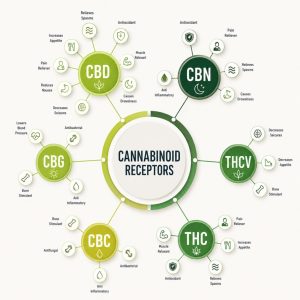
When cannabinoids are consumed, they interact primarily with CB1 and CB2 receptors in the body. However, each cannabinoid interacts with these receptors in a slightly different way, which is what leads to differences in their effects.
Some cannabinoids may have a stronger interaction with certain pathways, while others influence the system more indirectly. This variation is what makes cannabinoid diversity important. Instead of treating them as interchangeable, it’s more accurate to see them as different tools that can contribute to different outcomes.
Understanding these differences allows users to make more informed decisions instead of relying on trial and error. Rather than guessing what might work, you can start identifying which cannabinoid profiles align better with your intended experience.
Research on cannabinoids is still developing, and there is a lot that is not yet fully understood. What is already known is that cannabinoids interact with receptors throughout the body and central nervous system, influencing how signals are transmitted between cells.
This interaction can affect a wide range of processes, including how the body responds to stress, how it regulates internal balance, and how it processes physical sensations. Because of this broad interaction, cannabinoids are often associated with both mental and physical effects, even though the exact mechanisms are still being studied.
From a practical perspective, this is also why different people report different experiences with the same cannabinoid. Individual biology, dosage, and combination of compounds all play a role in how these interactions are perceived.
CBD is the most widely used and recognized cannabinoid today. One of its key characteristics is that it does not produce the intoxicating “high” associated with THC. This is one of the main reasons it has become so popular in wellness-focused products.
CBD oil is one of the most common delivery methods. It is typically taken orally or sublingually, allowing for relatively fast absorption. Other forms include capsules, edibles, and extracts, but oils remain popular due to their flexibility in dosing and ease of use.

CBN (cannabinol) is a cannabinoid that forms when THC naturally breaks down over time through exposure to oxygen and light. Because of this process, it is often found in aged cannabis material.
CBN is sometimes described as mildly psychoactive, although in practice its effects are generally subtle. It is most commonly used in products that are designed for evening use or relaxation-focused experiences.
Many users report that CBN helps them fall asleep more easily and maintain sleep throughout the night. However, most current research is still limited and often based on preclinical studies or user reports rather than large clinical trials.
Early research suggests that CBN may have activity against certain bacterial strains, indicating potential antimicrobial properties within cannabinoid compounds.
Some animal studies have shown increased food intake after CBN exposure, suggesting a possible role in appetite regulation, although human data is still limited.
CBN may help protect nerve cells from oxidative stress, which is relevant in the context of long-term neurological health research.
CBG (cannabigerol) is often referred to as the “mother cannabinoid” because it acts as a precursor to many other cannabinoids, including CBD and THC. During plant growth, most CBG is converted into other compounds, which is why it is found in smaller quantities in mature plants.
CBG is non-intoxicating and does not produce a high. Interest in it is growing as research and product availability increase.
CBG may have antioxidant-related properties and is being studied for its potential role in physical comfort and balance.
Research suggests CBG may be effective against certain bacteria, including more resistant strains, although further studies are needed.
CBC (cannabichromene) is a non-psychoactive cannabinoid that primarily interacts with CB2 receptors. It is often considered a complementary cannabinoid that works well alongside others in full spectrum formulations.
CBC interacts with anandamide, a compound associated with mood regulation and motivation, which may influence emotional balance.
CBC has been studied for its potential role in supporting neural stem cells, which are important for maintaining healthy brain and nervous system function.
CBDA is the raw, acidic form of CBD and behaves differently because it does not directly bind to CB1 or CB2 receptors in the same way as many other cannabinoids.
Instead, it interacts with enzymes and may influence how long naturally occurring endocannabinoids remain active in the body by slowing their breakdown.
Early research suggests CBDA may interact with certain viral spike proteins involved in cell entry mechanisms.
CBDA may be more effective when consumed as part of a full plant extract rather than in isolation.
CBDA may influence serotonin receptors, which are linked to mood regulation pathways.
CBGA is a foundational cannabinoid that serves as the starting point for the formation of CBD, THC, and other cannabinoids. It is present in small amounts in mature plants due to conversion during growth.
Early research suggests possible anticonvulsant properties, although further studies are needed.
CBGA may influence enzymes related to cardiovascular health and oxidative balance.
Research is exploring CBGA’s potential interaction with viral mechanisms alongside CBDA.
With so many cannabinoids available, choosing the right one can be difficult. Trying to source and combine them individually often becomes complicated without proper knowledge, consistency, or guidance.
This is why many people prefer ready-made cannabinoid blends that are already balanced and formulated for reliable use. It removes guesswork and makes it easier to find a consistent experience that fits individual needs.
Discover the best CBG strains to try, from premium Platinum Cookies CBG to fruity Purple Punch and classic Blue Dream with a fresh CBG twist.

Puffco Plus, Peak, Peak Pro, or Proxy? Compare the main Puffco vaporizers and choose the best one for your budget, setup, and use style.

Not sure which herbal blend to choose? Take this fun personality test and find the tobacco-free blend that matches your mood, taste, and vibe.